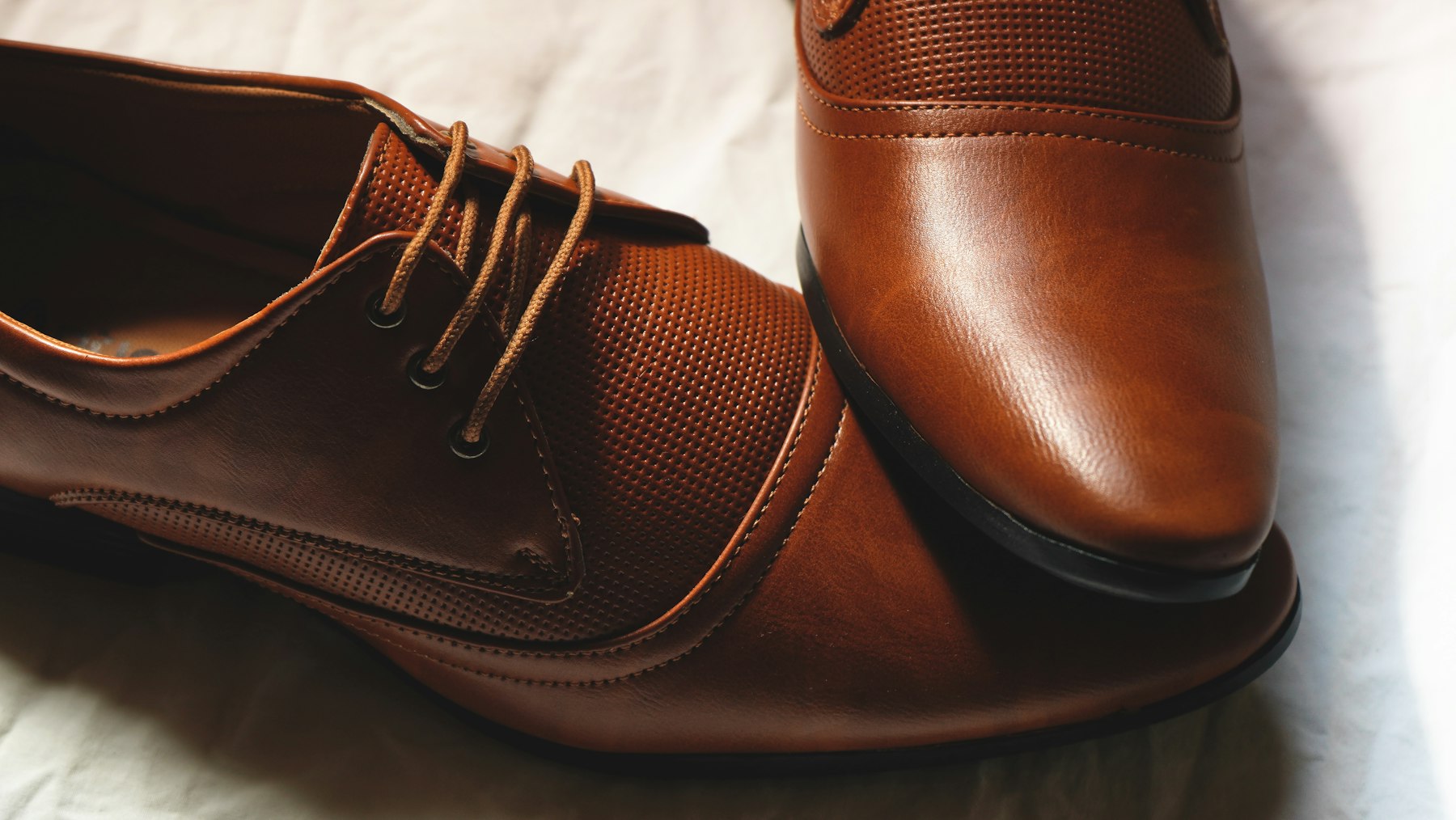
Construction
Goodyear-welted shoes, explained
A Goodyear welt joins upper and sole with a strip of leather so the shoe can be resoled. How it is built, why it costs more, and how to spot one.
What a Goodyear welt is
A Goodyear welt is a strip of leather that runs around the edge of a shoe and links the upper to the sole. The welt is stitched to the upper and to the insole. The outsole is then stitched to the welt. The sole is never sewn to the upper directly.
That one extra layer is the whole point. When the sole wears out, a cobbler cuts the sole stitching and sews on a new outsole. The upper stays as it was.
The method is machine-made. It is named after Charles Goodyear Jr., and it is not related to the tyre company. It is the usual construction among the English makers in this index.
How a Goodyear-welted shoe is built
The shoe is built from the inside out. The upper is pulled over a last and fixed to an insole that carries a rib, a raised strip on its underside. A first stitch runs through the upper, the welt, and the rib. The gap beneath the insole is filled, and a second stitch fastens the outsole to the welt.
The table lists the parts. Names vary a little between factories, and a shoe may have extra layers, such as a steel shank in the waist.
| Part | What it does |
|---|---|
| Upper | The leather that covers the foot, pulled over the last |
| Insole with rib | The base of the shoe; the rib is the anchor for the welt stitch |
| Welt | A leather strip stitched to the upper and the rib, and the surface the outsole is sewn to |
| Filler | Cork or similar material that fills the cavity between insole and outsole |
| Outsole | The sole, sewn to the welt by a second stitch |
| Heel stack | Layers of leather or rubber that build the heel |
Why a welted shoe can be resoled
In a welted shoe the stitch that holds the sole is separate from the stitch that holds the upper. A cobbler cuts the sole stitch, lifts the old outsole, and attaches a new one to the same welt. The upper and the insole are not disturbed.
That is why welted shoes are bought to be kept. The sole is the part that wears first, and it is the part that can be replaced. How many times depends on the leather, the cobbler, and the shape of the shoe when it arrives. Resoling ends when the welt, the insole, or the upper is worn through.
A hand-welted shoe is built on the same idea, with a welt, but the work is done by hand rather than on a Goodyear machine. The guide to England, Italy and Spain shows where each country leans.
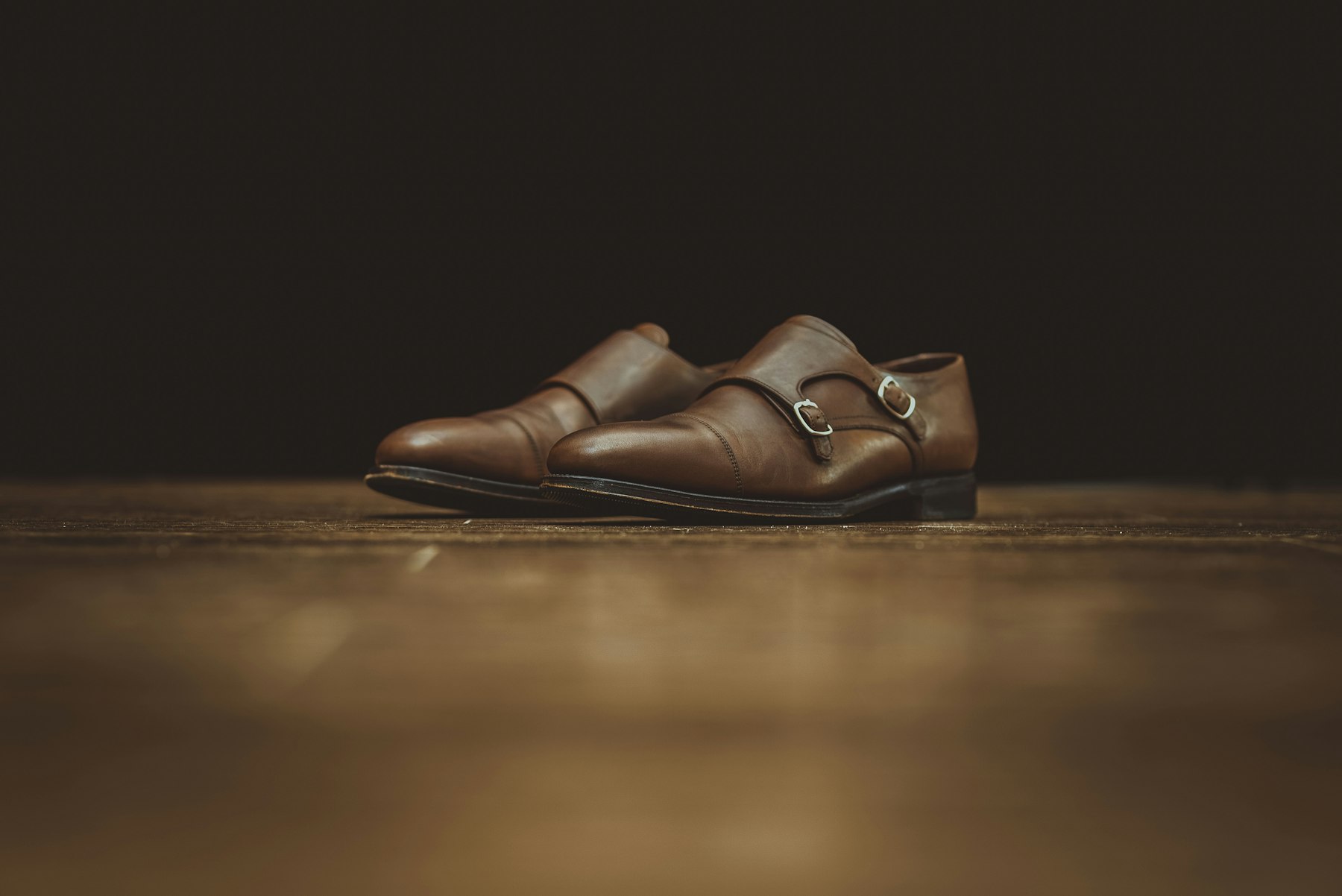
Why Goodyear-welted shoes cost more
A welted shoe has more parts and more steps than a cemented one. A welt, a rib, a filler, and a second stitch all add material and time. Loake, a maker in Kettering, says each of its pairs takes up to eight weeks to complete.
Many welted shoes also use a leather sole and a leather insole, which cost more than moulded rubber and board. And the price pays for something you can use. A shoe that can be resoled has a longer working life than one that cannot.
Price is not proof of quality. A welt does not tell you whether the leather is good or the last fits. It tells you how the shoe is held together, and what can be repaired.
Where the welt came from
Welted shoes were sewn by hand for a long time. The machine that made the method an industrial one is tied to 1869, when Charles Goodyear Jr. patented machinery for sewing a welt to the shoe. It built on earlier work, including a curved-needle machine by Auguste Destouy from the early 1860s, and its development owed a lot to his mechanic, Daniel Mills.
The name causes confusion. Charles Goodyear Jr. was the son of the Charles Goodyear who invented vulcanised rubber. The shoe method and the tyre company are separate.
The method spread through the English shoemaking towns. Crockett & Jones in Northampton, founded in 1879, makes Goodyear-welted shoes, and so does Barker in Earls Barton. The catalogue lists Cheaney, of Desborough, among the Goodyear-welted makers too.
Break-in, weight, and fit
A new welted shoe is firm. The sole, the welt, and the filler all resist the first few wears. The cork slowly takes the shape of your foot, so the shoe often feels better in the second month than in the first week.
Welted shoes weigh more than light, flexible ones. There are more layers between the foot and the ground. If you want the lightest possible dress shoe, a welt may be more structure than you need. The Blake guide covers the lighter option.
Pain at a bone is a wrong last, not a stiff welt. Mild resistance through the ball is ordinary. A storm welt, a second lip of leather along the join, adds protection from water and suits country shoes more than a black office oxford.
Looking after a welted shoe
A welted shoe lasts if you let it rest. Wear a pair no more than every second day, and put cedar shoe trees in as soon as you take it off, so the leather dries in shape. Brush off dirt before you polish, and keep leather soles out of standing water.
Take the shoe to a cobbler before the sole wears through, not after. If the outsole has worn down to the welt or the insole, the repair gets bigger. A cobbler can also check the welt stitching while the shoe is on the bench, which is worth doing every time the sole comes off.
How to tell if a shoe is welted
Turn the shoe over. On a welted shoe you see a line of stitching on the underside of the outsole, near the edge, and a welt that stands out from the upper. A second stitch, which fastens the welt to the upper and the insole, is visible on top of the welt where it meets the upper.
On a shoe without a welt, the sole edge sits close to the upper and you see no welt stitch. If a listing does not name the construction, ask, or check the maker’s page. A photograph of the toe will not tell you how the shoe can be repaired.
Loake and Crockett & Jones are both known as Goodyear-welt makers. Carmina works from Mallorca, where its family has made shoes since the nineteenth century. Browse the shoes and read the construction line in each listing. The oxford, derby and wholecut guide covers the styles built on either construction.